
30 September 2026Based on: Amber: The Ancient Gem That Inspired Jurassic Park
Five Things to Know About Amber
How tree resin becomes amber, what affects its value and what to consider when choosing a piece.
An amber bead feels light in the hand. As you turn it towards the light, you might notice a cloudy swirl, a change in colour or the remains of something caught inside. With its rounded shape, it can look quite different from a faceted sapphire or diamond.
Understanding what amber is helps you make sense of those details and decide what to look for when choosing a piece. Here are five things to know about its material, appearance and appeal.
1. It starts with tree resin
Amber is fossilised tree resin and belongs to the group of organic gems. It has a different origin from mineral gems such as ruby or sapphire. It is also worth distinguishing resin from sap, since the two are different substances but are often confused when describing amber.
That origin is part of amber’s appeal in jewellery. Its colour and the material preserved inside can make each piece look quite different. GIA’s description of amber explains how it forms and why it is classed as an organic gem.
2. Its warm feel is a clue, not proof
Dealers often mention that amber feels warm to the touch, but pressed amber can feel warm too. Holding a piece can give you a useful first impression, though it is only the beginning of an examination.
Before buying, ask whether the seller is offering natural amber, pressed material or an imitation, and whether it has been treated. Give any striking inclusion the same attention as the jewellery around it. A quick look can draw you to a piece, but it should not replace an informed examination.
3. Softness shapes the jewellery
Amber measures around 2 to 2.5 on the Mohs hardness scale and scratches easily. On older beads and pendants, you may notice surface wear and softened edges. That rounded feel can also be part of an older pendant’s appeal.
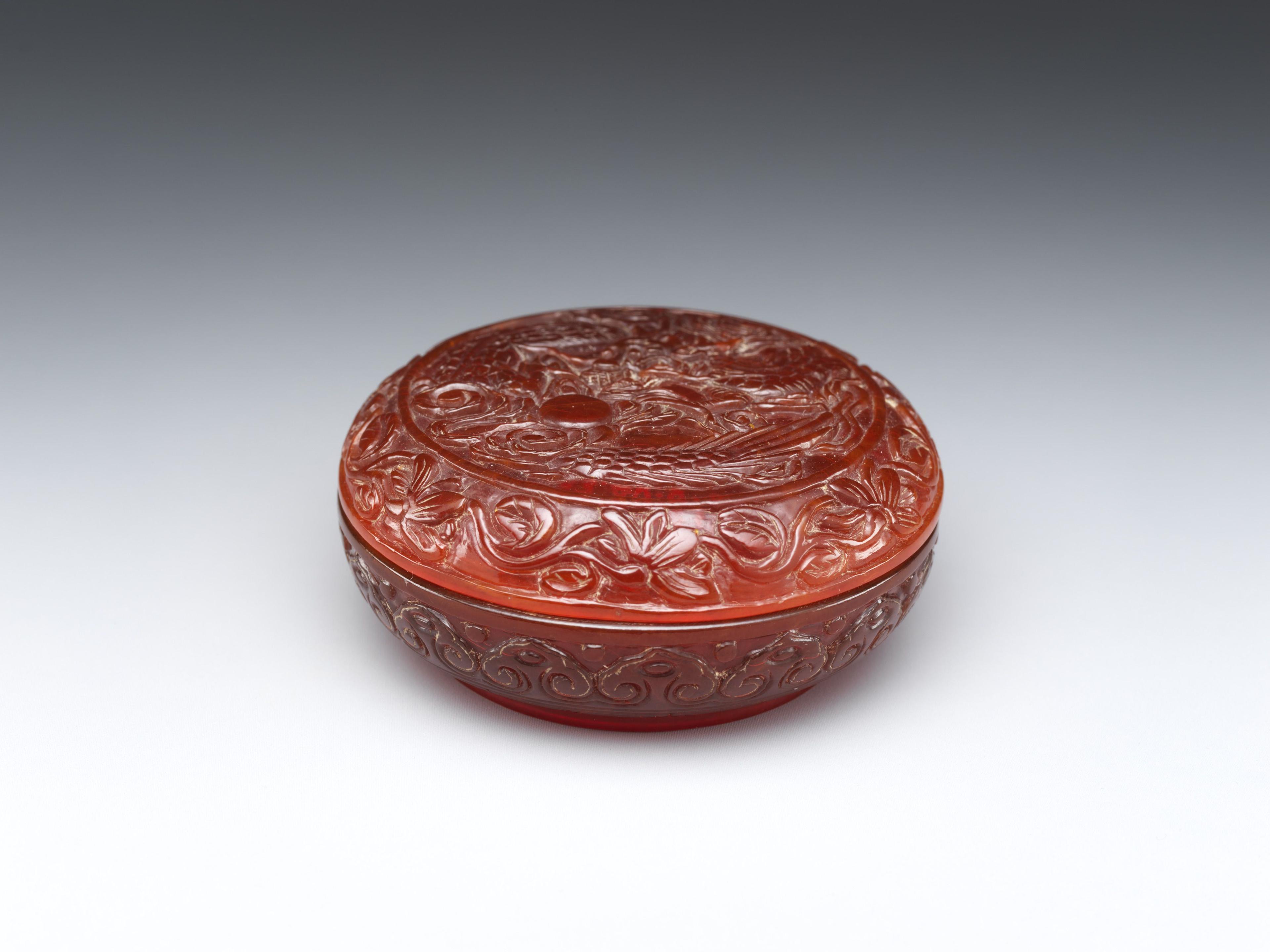
Its softness also makes amber suitable for carving. The Qing dynasty covered box pictured here shows how it can be worked into something much more elaborate than a bead.
That softness is worth bearing in mind when wearing and caring for amber. GIA recommends mild soap and warm water for cleaning. Heat and chemicals can damage it, and its poor toughness means it also needs protection from knocks.
4. Colour and inclusions both matter
Yellow and orange are familiar amber colours, though they do not describe every piece. Size alone does not tell you its quality either. When choosing a piece, consider its colour, transparency and condition together.
An interesting plant or animal inclusion can add value, but a speck inside a bead is not enough on its own to make it exceptional. GIA’s quality guide explains the separate roles of transparency and inclusions, along with treatments that can alter amber’s appearance. Ask what you are looking at before deciding what a piece is worth to you.
5. Preservation is not the same as dinosaur cloning
Jurassic Park made an insect trapped in amber part of one of cinema’s most familiar scientific stories. Amber can preserve remarkable evidence of ancient life, but that does not mean usable dinosaur DNA survives inside it.
The Natural History Museum explains the difference between preserving a fossil and preserving the DNA needed to clone an animal. An inclusion can still be fascinating, even if it does not support the film’s premise.
Amber’s resin origin, soft surface, colour and inclusions all contribute to its appeal. Each tells you something different about a piece, so it is worth looking at the whole object and understanding what the seller is offering.
Listen to the episode
This article is based on Amber: The Ancient Gem That Inspired Jurassic Park.
Listen now →