
7 July 2026Based on: Jean Baptiste Tavernier: History's Greatest Jewel Merchant You've Never Heard Of
Jean-Baptiste Tavernier: History's Greatest Jewel Merchant
Jean-Baptiste Tavernier grew from a Paris map seller's son into the 17th-century diamond dealer linked with Golconda, the Mughal court, the Peacock Throne and the Hope Diamond.
In 17th-century Paris, a map shop was not a quiet place. It was a room full of routes, coastlines, buyers, stories and speculation. On the Ile de la Cite, Jean-Baptiste Tavernier grew up in that sort of room. His father sold maps and engravings, and the people who came through the shop brought the world with them before Tavernier ever set foot outside France.
Tavernier was born in 1605, into a Protestant family of Flemish origin. That early setting matters. A child raised among maps, travel books and customers with news from abroad would have had a different sense of distance from most people around him.
By the age of 22, he had already visited England, the Netherlands, Germany, Belgium and Luxembourg. That early travel makes the later story feel less abrupt. Before the Mughal court, before Golconda, before the blue diamond that would become the Hope Diamond, Tavernier had already started learning how to move through unfamiliar places.
That education carried him much farther than Europe. In Tavernier's case, it carried him from a Paris map shop to the heart of the 17th-century diamond trade.
The road east
Tavernier lived at a time when European trade with Asia was becoming more organised and more competitive. The Dutch and English East India Companies built their power through sea routes. Tavernier chose the older land routes associated with the Silk Road.
He crossed Europe to Constantinople. From there, the route carried him through Persia and towards India. It was slower and riskier than a company voyage by sea, but it put him inside networks that a large trading company could not handle in the same personal way. Tavernier was not moving through this world as a tourist. He was there to trade, negotiate, observe and remember.
That was one of his advantages. He carried European goods that could be sold or presented along the way, including clocks, watches, jewellery and textiles. A sale mattered. So did access. In the world Tavernier moved through, a well-chosen gift could open a road that money alone could not.
Six voyages
Tavernier made six major voyages between 1631 and 1668, covering about 240,000 kilometres. The number is striking, but the method is more interesting than the mileage.
Tavernier kept going back. Each voyage added to his knowledge of routes, rulers, customs and stones. He visited the Mughal court. He reached the Golconda region, whose diamond mines shaped much of his later career. He sold European luxury goods to Eastern royalty and returned with precious stones for European buyers.
This is where Tavernier starts to read as a specialist merchant rather than a restless adventurer with a good eye. He was mobile, patient and commercially alert. He understood that stones were only part of the trade. Information was valuable too. Who controlled a route, how a court worked, what a ruler wanted, what a stone might fetch in Europe. All of that mattered.
Aurangzeb's jewel casket
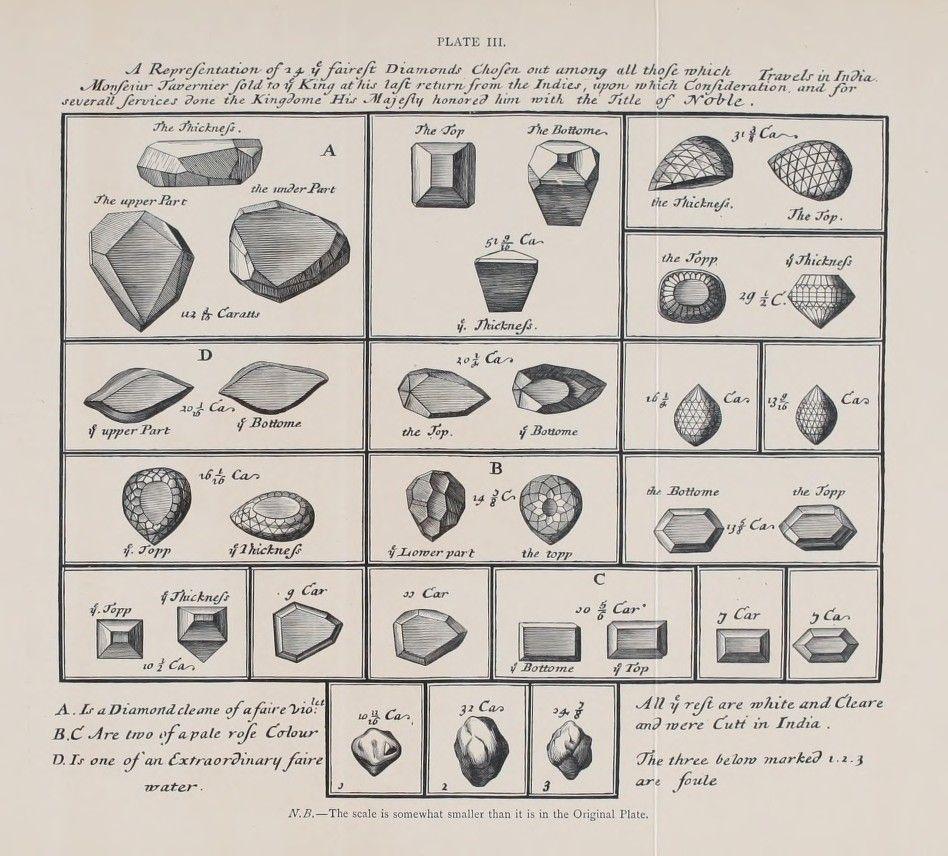
One of the sharpest scenes in Tavernier's life comes in 1665, at the Mughal court of Aurangzeb. Tavernier is given permission to open the imperial jewel casket and weigh its contents with his own hands.
Among the stones was a violet-blue diamond weighing 112 carats. It later passed to the court of Louis XIV, was recut, stolen during the French Revolution and eventually surfaced in London under the name the Hope Diamond.
That scene gives Tavernier's story its charge. He was close enough to royal collections to handle stones that later became famous. He measured them. He wrote about them. In a period before photography, a careful written account could become part of the life of the object.
The Peacock Throne
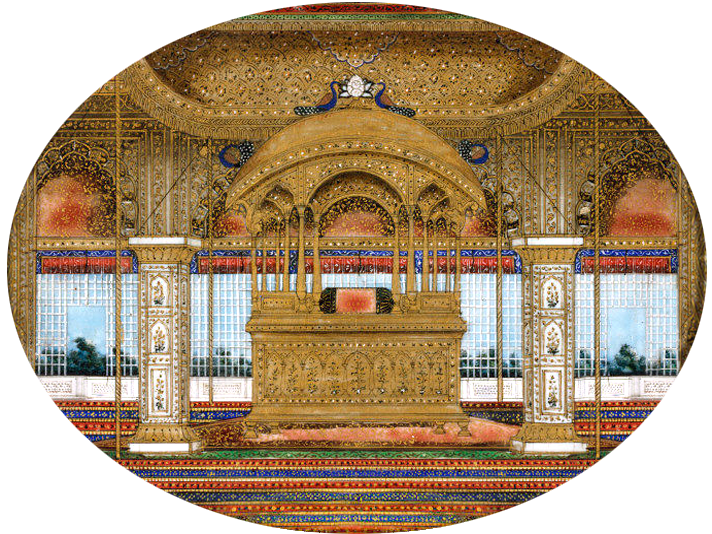
The Mughal court comes through most vividly in Tavernier's description of the Peacock Throne, a jewelled platform with columns, a canopy and ornamental peacocks.
The throne was designed to evoke the throne of Solomon. Gold and precious stones were being used to make an argument about rule, justice and imperial authority.
The Peacock Throne does not survive. Tavernier's account gives later readers a way to picture it, even if any written description has limits. He was a merchant, but in moments like this he becomes something else as well: a witness to objects that have disappeared.
The blue diamond
The Hope Diamond is hard to discuss without the curse taking over. The legend has its place, but the earlier stone is more useful here.
In Tavernier's world, the important point is movement. A rough blue diamond from the Golconda world passes through a merchant's hands, reaches Louis XIV in 1668 and is later reshaped into the French Blue. Long before the modern museum object, there was a trade route, a royal buyer and a dealer who understood the value of what he had.
That is a better lens on Tavernier than the curse. His career shows how stones moved from mines to courts, then into European royal and private collections. The famous name came later.
How he priced diamonds
Tavernier's story gets especially interesting when it turns practical. He divided diamonds into perfect and imperfect stones. A perfect diamond was valued at 150 livres per carat. An imperfect one was valued at 80 livres per carat. The calculation also allowed for the 2 percent payment owed to the King of Golconda.
That sounds dry on paper, but it is where the merchant becomes visible. Tavernier was sorting, comparing and pricing stones. He needed a system that could work across distance, language and courtly pressure.
Modern diamond grading uses different categories, but the instinct is familiar. Weight, quality and buyer confidence still sit behind the price of a stone. Tavernier was working long before the language of modern grading, but he was already trying to make beauty calculable.
What changed in jewellery
Tavernier's career also connects to a larger change in jewellery design. Before major stones became more available in Europe, jewellery often gave more attention to gold work, enamel and setting. As larger diamonds and coloured stones arrived, the gem could take the centre.
By the 17th century, gemstones increasingly became the main component of jewellery, rather than the metal setting. Tavernier did not cause that shift by himself. He belongs inside it.
His career helps explain why European jewellery began to look different. The stone was no longer just one part of the work. In the right hands, and in the right court, it could carry the whole piece.
The book
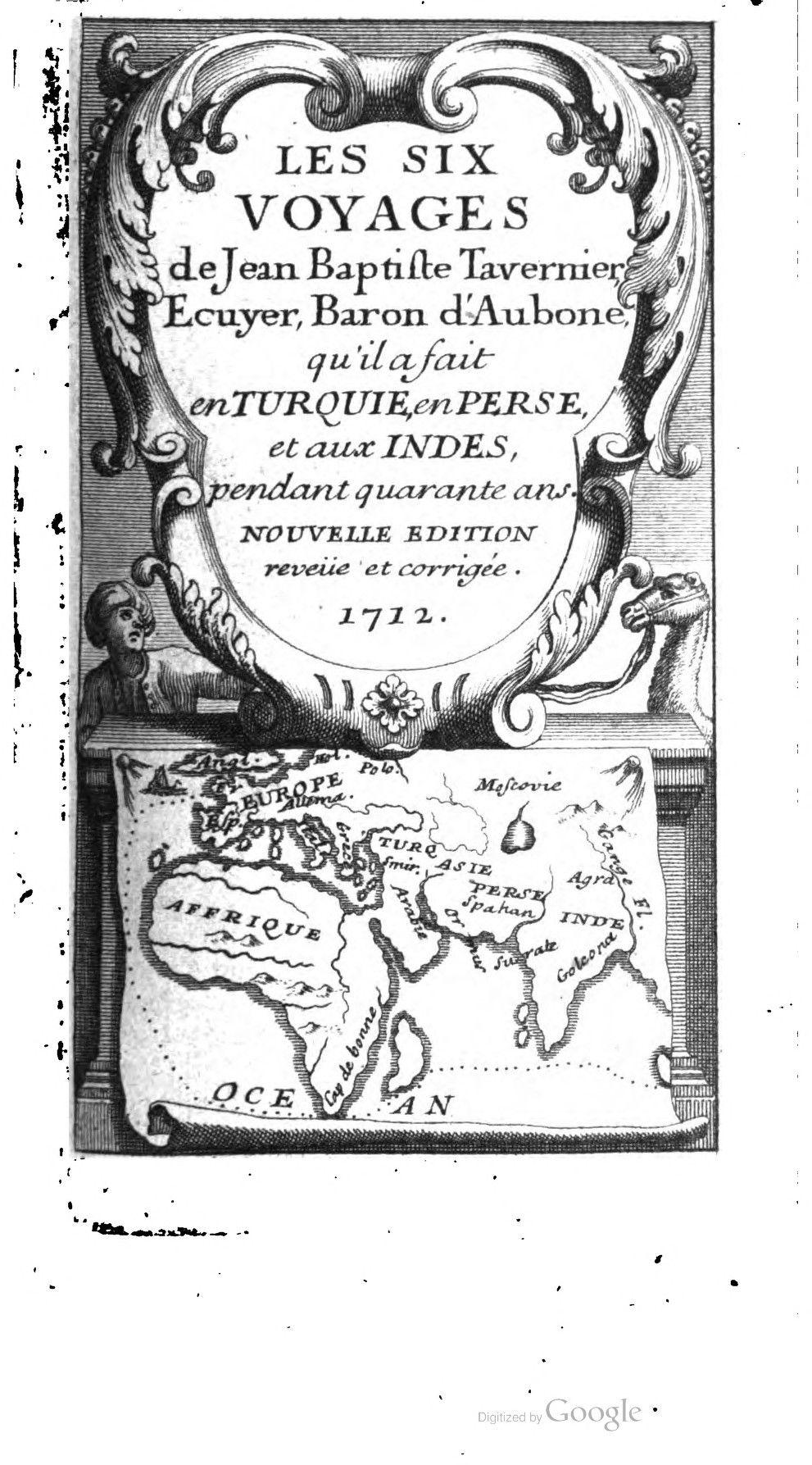
Tavernier's knowledge did not stay private. Louis XIV requested that he write about his travels to help other merchants understand trade in India and the Middle East. His most famous work, The Six Voyages of Jean-Baptiste Tavernier, was published in 1676.
Tavernier was a merchant first, not a polished literary figure. He used writers to help shape the material, but the value came from his decades of travel, drawings, notes and first-hand observation.
The book was both a travel account and a trade document. It covered routes, money, customs, jewels and court life. For anyone trying to understand the movement of diamonds in the 17th century, Tavernier left working knowledge rather than polished myth.
The portrait
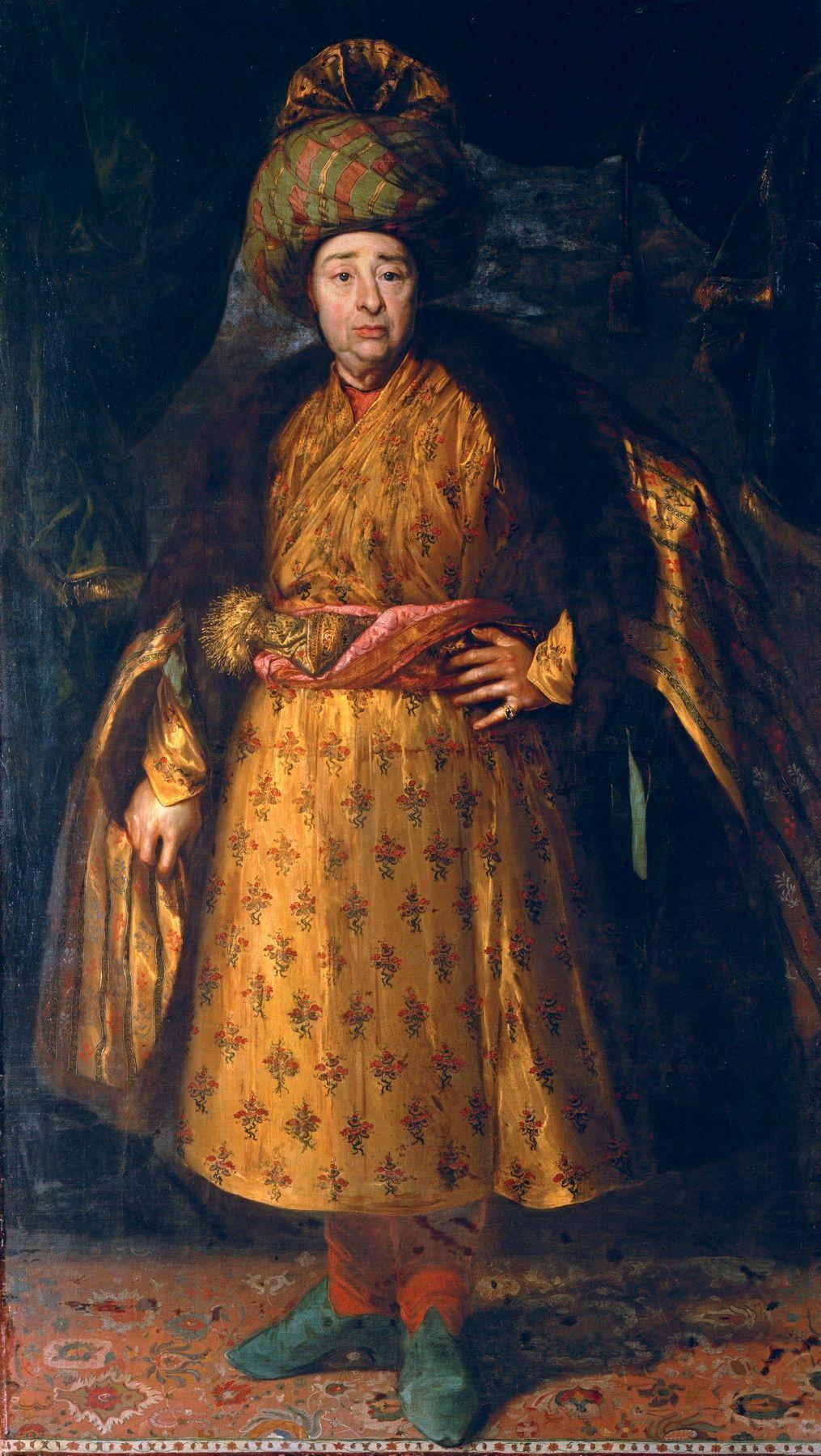
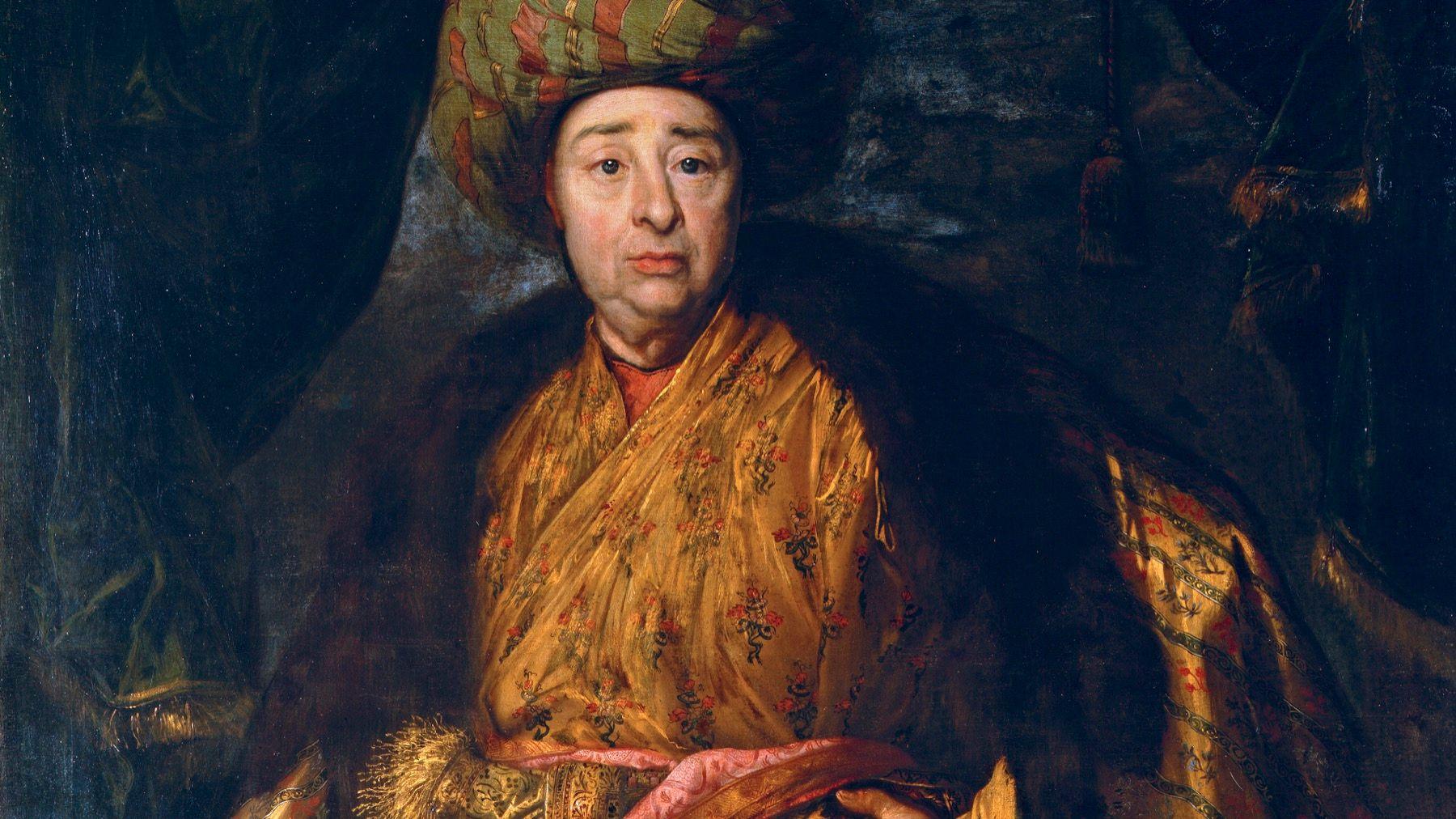
Tavernier's portrait matters too. Dated to 1678, when he was 73, it shows him in a khilat, an Eastern garment given to him by the Shah of Persia, with a small diamond ring on the little finger of his left hand.
The image is revealing because it is controlled. Tavernier is not shown as a tired man back from the road. He presents himself through the world he had travelled through. The garment, the ring and the pose all say something about the identity he wanted to project.
That fits with the rest of his life. His Paris residence held curiosities brought back from the Indies. His Swiss castle held jewellery and precious stones. He collected the world he moved through, then let that world appear in his image.
The last journey
Tavernier could have stopped. He had money, reputation, a published book and a place in courtly circles. He still could not settle.
In the early 1680s, the Great Elector of Brandenburg invited him to help lead a project to create an East India Company. Later, Tavernier set out east again through Russia. He did not reach the Orient. He died near Moscow in 1689, at the age of 84.
That ending is hard to ignore. Tavernier did not die in the quiet setting his success might have bought him. He died on the road, still pointed east.
What remains
Tavernier is often remembered because of the Hope Diamond, and that is understandable. The stone gives the story a famous centre. But the wider case for his importance is stronger.
He came from a Paris map shop and spent his adult life turning lines on paper into routes he could use. He handled stones at the Mughal court, described the Peacock Throne, sold the blue diamond to Louis XIV, built a pricing system for diamonds and left a book that carried practical trade knowledge into Europe.
The Hope Diamond is the easiest way into the story, but Tavernier's life has a neater shape than one famous stone. He began among maps and ended on the road, still looking east. Between those two points sits the real subject of the story: the routes, courts, mines, merchants and hard commercial knowledge that carried diamonds from Golconda into European imagination.
Listen to the episode
This article is based on Jean Baptiste Tavernier: History's Greatest Jewel Merchant You've Never Heard Of.
Listen now →